


Cartoonish Candy Bear Statue
Description
Technical Parameters
Your Leading Hangzhou Zaizuo Cultural & Creative Co., LTD. Supplier
Hangzhou Zaizuo Cultural & Creative Co., LTD was established in 2013. Our company specializes in the manufacturing of decorative home accessories, development and production. With more than 10 years of research and development, we are one of the well-known leading enterprises in the home accessories chain in China. Our company mainly deals in home decorations, decorative pictures, trending toys and so forth. We have more than 1000 original designs products. We also have our own subsidiary brand such as "Palmtree", "Yingsen", "Yuncan". All of our products comply with international quality standards and are greatly appreciated in a variety of different markets throughout China.
Why Choose Us?
Excellent after sales support
We offer a comprehensive after-sale policy in the unlikely event that you are not 100% satisfied with any delivered. Such as product use, installation and other aspects, as well as perfect solutions to various product-related problems encountered by customers.
Wide range application
Our products are not only suitable for home decoration but are also widely used in the decoration of companies, stores, hotels, shopping malls and other places.
On time response
If you are interested in any of our products or would like to discuss a custom order, please feel free to contact us. We are looking forward to forming successful business relationships with new clients around the world in the near future.
Strong production capability
We have our own factory covering an area of 10,000 square meters and employing more than 300 employees. Our well-equipped facilities and excellent quality control throughout all stages of production enable us to guarantee total customer satisfaction.


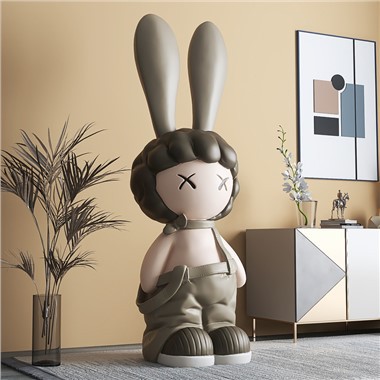

What is Cartoonish Candy Bear Statue?
Cartoon statues are a delightful way to bring beloved characters from the screen into the real world, adding a touch of nostalgia and whimsy to any space. These sculptures capture the essence of iconic figures, from their signature poses to their expressive faces, allowing fans to enjoy a tangible piece of their favorite cartoons. Whether it's a classic or modern character, each statue offers a unique blend of artistry and playfulness, making them perfect for collectors and enthusiasts alike.
Benefits of Cartoonish Candy Bear Statue
Tactile experience
Sculpture engages the sense of touch, allowing viewers to appreciate the texture and form of the artwork in a way that paintings cannot.
Three-dimensionality
Sculptures offer a unique perspective through their three-dimensionality, inviting viewers to interact with the artwork from different angles.
Public art and community engagement
Many sculptures are created for public spaces, enhancing community identity and encouraging social interaction.
Durability and longevity
Sculptures, particularly those made from durable materials like stone or metal, can last for centuries, preserving artistic expression for future generations.
Symbolism and meaning
Sculptures often carry deep symbolic meanings, allowing for complex storytelling and cultural significance that can resonate with audiences.
Physical presence
The physical presence of a sculpture can create an impactful experience, often dominating a space and drawing attention in a way that paintings may not.
Relief sculpture: Relief sculptures include images carved from a flat surface of the same material.
There are a few variations of this form: High relief with the images clearly projecting above the backdrop, low relief (also known as bas-relief) with the images only slightly raised, and sunken relief with the images carved in, never rising above the backdrop.
Freestanding sculpture: Freestanding sculptures are three-dimensional objects unattached to any backdrop. This style of sculpture can be viewed from any angle with space on all sides.
Carved sculpture: Carved sculptures are created through a subtractive process. For carved sculptures, use a chisel to chip away at material like wood or stone.
Modeling sculpture: Use an additive process to create modeling sculptures by shaping a soft material like clay or wax. Clay sculptures are often fired in a kiln to harden.
Assembled sculpture: Assembled sculptures also use an additive process with the sculptor combining various materials like scrap metal and found objects. Assembled sculptures are often held together by glue or welding.
Cast sculpture: This method involves pouring a liquid material into a mold designed for a specific shape. This process allows for multiple copies of the same shape.
Application of Cartoonish Candy Bear Statue
Amusement parks
Cartoon statues add vibrancy and excitement to amusement parks, creating a playful and engaging atmosphere for visitors.
Museums
These statues can be used in museums to depict famous cartoon characters, making exhibits more interactive and appealing to children and adults alike.
Shopping malls
Placing cartoon statues in shopping malls can attract shoppers and provide a unique backdrop for photo opportunities, enhancing the overall shopping experience.
Public spaces
Municipalities and city planners can utilize cartoon statues to beautify parks, gardens, and other public areas, making them more visually appealing and enjoyable for residents and tourists.
Material of Cartoonish Candy Bear Statue
Clay
Many may recall fond memories of using clay to create simple sculptures back in school, but there's plenty of reasons why it can be an ideal material in the hands of an expert too. When slightly warm and damp, clay is incredibly malleable and versatile, allowing sculptures to start creating without needing additional treatment for the material.
The creative freedom that clay affords an artist means that almost any shape imaginable can be born. Using specialist tools, repeating patterns or intricate designs can be carved out of the clay to add depth to a clay sculpture. Many hobbyist sculptors will start out using clay due to how forgiving of a material it can be and the ability to drive right into the creation process.
Glass
Allowing for elaborate and graceful sculpting designs, glass requires heating up within a kiln or oven to allow it to be manipulated into various shapes with the aid of glass-working tools. This process is known as 'slumping' glass, which is usually used in tandem with 'fusing' – where pieces of glass are heated and fused together – in order to join together into more elaborate and eye-catching glass sculptures.
Wood
Sculptures which make use of wood as the primary material will typically focus on the natural colouration and patterns within the wood grain.
Some artists will use minimal techniques to showcase the beauty of natural forms, while others will carefully carve and manipulate the material to give life to fascinating creations. Tools can range from more manual hand carving tools to using power tools when creating large-scale works.
The tactile nature of wood as a sculpting material gives it an appealing warmth and texture, as well as flexibility over the finish – polishing and buffing can add shine, while allowing the natural matte finish to flourish can make certain sculptures feel alive.
Metal
Arguably the most resilient material in this list, metal can require extensive preparation before it can be worked with for sculpting. Welding equipment is typically required for joining and cutting metal, meaning more specialist skills are required in order to sculpt using metal. The overall results can be incredibly striking, especially when such an industrial material is used to replicate such delicate forms like those created.
Process of Cartoonish Candy Bear Statue

For original artwork and some reproductions, the process may begin with a sketch from which the artist makes a clay or plaster original or model. Usually, this step is completed in the design process so the manufacturer can see the three-dimensional piece, review and approve it, and commit to full-scale manufacture. When the work is reviewed, modified (if necessary), and approved, a mold is made from the sculpted model.
Using the mold made especially from an original design or an existing mold that may be several generations removed from its original, liquid resin, plaster, or cement is poured into the mold. Although each statue is made individually, many molds for the same design are used to reproduce a number of statues at the same time. The molds are stored in temperature- and humidity-controlled rooms for 24-72 hours, depending on the configuration of the piece. Heat is not applied, so this is called "cold cure" statuary.
When the statue has dried partially, the mold is carefully removed. This is possible because the flexible mold can be removed from complex detailing and undercut areas of the statue without damaging either the statue or the mold. The mold can be cleaned and reused. The statue is stored again in a drying room to be completed cured or dehydrated. This step also takes 24-72 hours depending on the material, size, and complexity of design of the piece. The dried statues are inspected before the finishing processes begin.
Finishing involves two phases of sanding for most of the statue designs. Enriched cement statues and other pieces with rough appearances aren't sanded at all or are sanded once before priming. Statuary with the finest finish is sanded then painted with primer and sanded a second time. The statues are inspected before they are painted because the quality of the sanded finish will affect quality of the paint job and the final appearance.
Statues of the same color are painted in batches in the paint room. Spray guns are used to apply the most popular colors. Most statuary makers will custom finish or paint statues at the customer's request; in this case, the statues are painted individually in small work stations. The painted statues are left to dry overnight.
The statues are moved to the packing and shipping department where small ones are boxed in cardboard and larger models are crated in wood. They are stored pending shipment.

How to Maintain Cartoonish Candy Bear Statue
Dust
Fortunately, dust is the least damaging of the five. If left for an unordinary amount of time without care (think years and years), dust may begin to "cake" onto your figurines, making it hard to remove. However, dust is mostly troublesome just because it can make a collection look "dull." Displaying your figurines in a closed cabinet or in their boxes can help keep the dust at bay.
Dirt/oils
Always wash your hands before handling or cleaning your figurines. The natural oil of your skin, and any dirt or dust on your fingertips, can cause your collection to get grimy and gross. Avoid touching or handling your figurines on a daily basis, or else they may develop a "gently used" appearance.
Sunlight
Keep your figurines displayed out of natural lighting. Sunlight can cause your figurines' colors to fade or become spotty. Avoid placing your figurines under windows where natural light pours through.
Heat
Most all figurines, especially those made of PVC, will become warped or bent when faced with heat. In more extreme cases, figurines' sculpts may become "sticky" or "bubbly," as a result. Keeping your figurines out of direct sunlight helps solve this problem, but watch out for certain types of light bulbs as well if you are displaying your figurines in a lighted glass cabinet. LED lights will provide sufficient light without heating up your precious collection, so be sure to use those kinds of lights only!
Moisture
If your figurines ever get wet, be sure to dry them thoroughly. Long-term contact with moisture can cause figurines to lose their paint and decals, and even make them develop weak joints, leading to articulation problems.
Important Things to Consider When Commissioning a Statue?
When commissioning a statue, the type of casting used is an important consideration because it can affect the sculpture's longevity and overall value. Some duplications, for example, are made using the lost-wax process. A duplicate of an existing sculpture or statue can be created using this method by recasting the clean product in a new cast. This laborious process necessitates the use of the original mould and must be dipped quickly and steadily for maximum effectiveness.
The molten metal is wrapped around the original figure and then dipped into a new cast using the lost-wax casting method. The new artist can then improve on these duplications in a variety of ways. An emblem or other detailed engravings, including a new artist signature, can be added. While this is most commonly done to honour the original design, it could also be used to imitate the artwork of another creator.
Before commissioning a piece, it is important to understand the bronze engraving systems. This ensures that only original or improved recast pieces are purchased. Reputable industry experts, can assist in the creation of one-of-a-kind custom and elusive specialty pieces.
Large custom bronze statues are typically commissioned by government agencies and political parties for placement in public or common areas. Making moulds for bronze statues such as horses or soldiers is a time-consuming process, and these are usually commissioned several years in advance. These larger works are typically displayed in memorial areas and are frequently unveiled during holidays or religious holidays.
Sand casting may have been used to create smaller bronze statues and states. This method is based on the inclusion of a sand mixture in the mould material. The amount of sand used will reduce production costs but may have no effect on the final price of the statue or sculpture. Sand or a mixture of sand and other products is used in the casting process for a variety of reasons. The end result is a long-lasting and appealing product that can be sold quickly. Although sand cast sculptures are less likely to withstand harsh sea air, most other elements are no match for these sand cast sculptures.
The purpose of adding sand to the mixture is to reduce the cost of mass production. A sand cast can quickly replicate a popular design, such as one with animals, people, or vehicles. The foundries that make this type of cast are highly specialised and efficient at producing multiple versions of sculptures from the same cast.
Our Factory
We have our own factory which has been established for nearly 10 years. Covering an area of 10,000 square meters, with more than 300 employees. Our well-equipped facilities and excellent quality control throughout all stages of production enable us to guarantee total customer satisfaction.


FAQ
Hot Tags: cartoonish candy bear statue, China cartoonish candy bear statue manufacturers, suppliers, factory, Living Room Decorative Figurine, Balloon Dog Art Sculpture, Sleek Figurine, Bunny Floor Ornament, Lion Desk Statue, Polar Bear Statue
Previous
Resin Rabbit StatueSend Inquiry


